Skill drills
How to Tie Fishing Knots
Every fishing knot comes down to a few decisions: how many turns, which loop, wet or dry. These drills put a hook and a line in front of you and walk you through each knot one decision at a time. Pick wrong and you watch the knot fail under load, so you learn why each step is there before it costs you a fish.
- Free
- No signup
- Interactive 3D
- Sourced from state wildlife agencies
5 techniques
Pick a technique
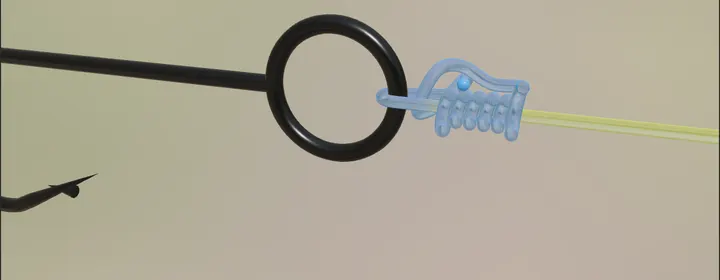 Start hereImproved clinchThe standard knot for tying fishing line to a hook, lure or swivel: five turns round the line, a tuck by the eye, and a second tuck back through the big loop.7 steps
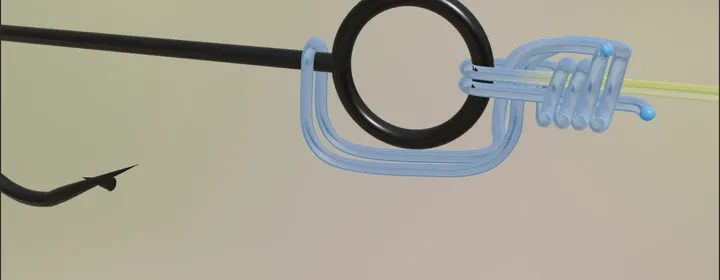 Technique 2PalomarA strong, simple knot tied in a doubled line: push a loop of line through the eye, tie an overhand knot in it, and pass the loop over the hook.6 steps
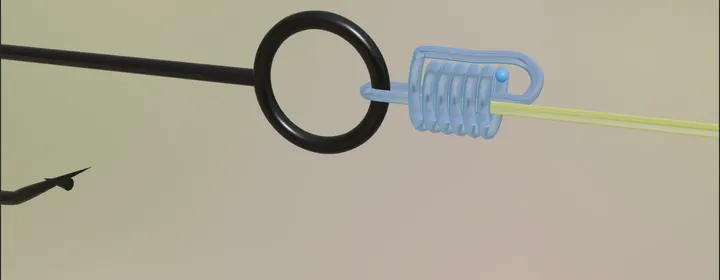 Technique 3Uni knotA versatile knot for tying line to a hook, lure or swivel: double the line back, lay a loop over it, and wrap six turns through the loop before sliding it down to the eye.6 steps
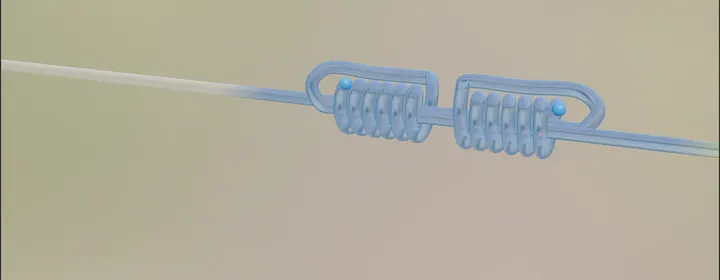 Technique 4Double uniJoins two lines: overlap the ends, tie a uni knot with each tag end round both lines, then pull the standing lines apart so the two knots slide together.6 steps
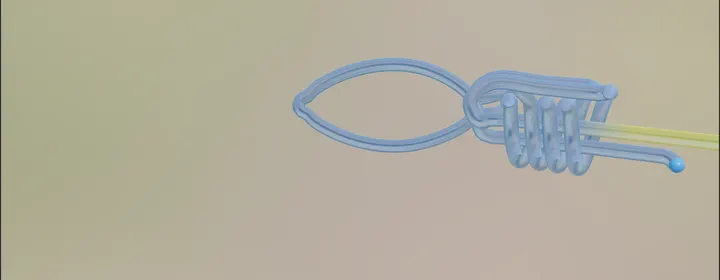 Technique 5Surgeon's loopA quick, strong fixed loop in the end of a line or leader: double the end back and tie a double overhand knot with both strands.6 steps
Every time
Rules for every knot
- Wet every knot with water or saliva before you pull it tight.[5, 6, 7]
- Tighten slowly and steadily, then seat the knot with a firm pull on the standing line.[1, 12]
- Coils should lie neatly side by side, never crossed over each other.[3, 18]
- Trim the tag end short, but never flush against the knot.[5, 8, 9]
- Never burn the tag end. Heat damages the line and the knot.[5]
- Retie any knot that looks wrong. A badly tied knot can cost half the line's strength.[4, 9]
Watch & learn
Fishing knots on video
Picked from our video library. These are other creators' videos, so where one differs from the drill, the drill's sourced steps are the ones to follow.
The Four BEST Fishing Knots HOW TO | Fishing Knot Tutorial MADE EASY that every angler should know
1Fish2Fish
0How to: Tie two EASY fishing knots - Improved clinch Knot & Palomar Knot
Matty Wong Fishing
0Fishing Knots you NEED to Know! How to Knot Tying Tutorial (Improved Clinch, Palomar, & Alberto)
1Rod1ReelFishing
0The ONLY Knot You’ll Ever Need? | How to Tie the Uni Knot
Local Knowledge Fishing Show
0How to Tie the Double Uni Knot
Take Me Fishing
0How to Tie a Surgeons Loop Fishing Knot
Dieter Melhorn Fishing
0
FAQ
Knot questions
Learn it hands-on
Nothing beats a day on the water with someone who ties these all day long. Browse fishing guides near you and ask for a lesson.
Find fishing guidesSources
Where the checkable claims above come from. Rules and figures change, so confirm anything you are about to rely on against the source itself.
- The Improved Clinch KnotU.S. Fish & Wildlife Service (fws.gov)
- Fish Texas: A Basic Guide for the Beginning AnglerTexas Parks and Wildlife Department (tpwd.texas.gov)
- MinnAqua Leader's Guide, Chapter 5, Lesson 1: Freshwater Rods and ReelsMinnesota Department of Natural Resources (files.dnr.state.mn.us)
- Knot-Tying GuideIllinois Department of Natural Resources (dnr.illinois.gov)
- Knot Tying (I FISH NY lesson plan)New York State Department of Environmental Conservation (extapps.dec.ny.gov)
- Learn to fish: tying the knotUtah Division of Wildlife Resources (wildlife.utah.gov)
- Tying better knotsOregon Department of Fish and Wildlife (myodfw.com)
- Chapter 3: Knots and Casting TechniquesOklahoma Department of Wildlife Conservation (wildlifedepartment.com)
- "Knotes" on KnotsPennsylvania Fish & Boat Commission (pa.gov)
- Fishing KnotsVermont Fish & Wildlife Department (vtfishandwildlife.com)
- Improved Clinch Knot: Fishing Knot Tying StepsTake Me Fishing (Recreational Boating & Fishing Foundation) (takemefishing.org)
- Best Fishing KnotsTake Me Fishing (Recreational Boating & Fishing Foundation) (takemefishing.org)
- Uni KnotTake Me Fishing (Recreational Boating & Fishing Foundation) (takemefishing.org)
- How to Tie a Palomar KnotTake Me Fishing (Recreational Boating & Fishing Foundation) (takemefishing.org)
- How to Tie a Double Uni KnotTake Me Fishing (Recreational Boating & Fishing Foundation) (takemefishing.org)
- Fishing Loop KnotsTake Me Fishing (Recreational Boating & Fishing Foundation) (takemefishing.org)
- Freshwater Fishing TipsFlorida Fish and Wildlife Conservation Commission (myfwc.com)
- Fishing knots 101Berkley (Pure Fishing) (berkley-fishing.com)