Fishing regulations exist for one reason: to keep fish populations healthy enough that future generations can enjoy the same fisheries we do today. Most states use catch and release as their primary tool for managing pressure on popular species, but the rules vary wildly depending on where you fish. A 12-inch largemouth bass might be a keeper in one state and illegal to harvest in the next. Understanding your local regulations before you cast a line isn't bureaucratic busywork, it's the difference between a legal trip and a costly one.
Every state's fish and wildlife department manages waters differently based on habitat capacity, population studies, and management goals. Some states are aggressive about slot limits (keep only fish within a specific size range). Others focus on seasonal closures. A few have moved toward mandatory catch-and-release-only zones for entire species or waterways. Guides and charter operators know these rules intimately because their livelihoods depend on it, and they're your best source for what's actually legal on the water.
Why Regulations Change and What They Protect
Fish populations don't bounce back instantly from overharvesting. A lake that sees heavy pressure during spawning season can take five to ten years to recover even after harvest rules tighten. States use regulations to spread fishing pressure across seasons and size classes, protecting juvenile fish long enough to mature and ensuring enough large spawners survive to reproduce.
Slot limits are the regulatory tool you'll encounter most often. A typical slot might read "keep fish between 12 and 15 inches, or 18 inches and over." The logic is straightforward: it protects medium-sized fish that are prime spawners, removes young-of-the-year before they compete with other age classes, and allows you to harvest trophy-sized fish for a special meal or mount. Some anglers hate this because it limits the keeper size most anglers actually catch. Others see it as the only sustainable way to maintain populations under modern fishing pressure.
Seasonal closures are more controversial. Closing a fishery during peak spawning season protects fish when they're vulnerable and concentrated. The tradeoff is that guides and anglers lose prime fishing weeks. Most states enforce spawning closures on bass, pike, and walleye. Saltwater spawning closures are less common because ocean species often migrate to spawning grounds miles offshore, beyond practical enforcement reach. Agencies publish these dates yearly, sometimes adjusting them based on water temperature or population surveys.
Understanding Size Limits and Slot Restrictions
The simplest regulation is a minimum size limit: keep any fish you catch above that size, release everything below. A 14-inch minimum on largemouth bass means you can't keep anything under 14 inches. This is easy to understand and manage, but it doesn't protect the largest, most valuable spawners. That's where slot limits come in.
A "no-harvest" slot protects a specific size range that must be released. Example: largemouth bass 12–18 inches (catch them, photograph them, but you must let them go). These zones protect the most productive spawners. You can still harvest 11-inch juveniles and 19-inch trophies, but the sweet-spot breeding fish get a break. Some anglers find this frustrating, especially when they're catching plenty of legal-sized fish but can't keep them. The alternative, no regulation and a collapsed fishery, is worse.
A "keep" slot flips the logic: you must keep fish within the slot range, release everything outside it. This is rare and usually applied to niche situations. Example: some walleye fisheries require you to keep walleye 15–18 inches and release anything outside that. It's designed to harvest strong middle-year classes while protecting both young fish and trophy spawners. Mandatory harvest slots are controversial because they force you to kill fish you might prefer to release, but they work in specific recovery situations.
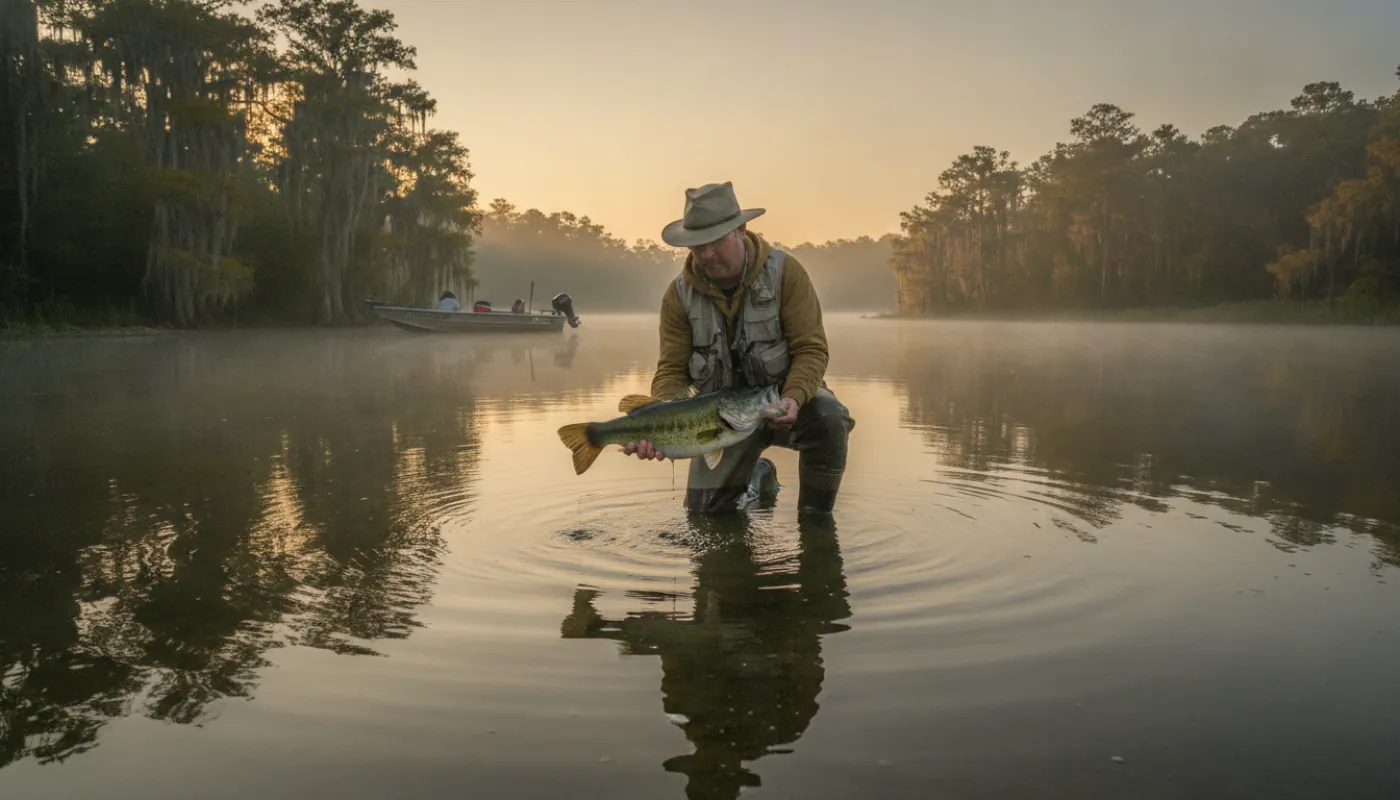
Catching a slot fish is a test of self-discipline. Your first instinct is to keep a big 15-inch bass because it's a great fish. But the regulation wants that fish to spawn. Walk it back to the water with your hands wet, minimize air exposure, and release it gently. Most fish survive proper catch-and-release. The mortality rate depends on how you fight them (brutal, hard runs cause physiological stress), how long they're out of water (under three minutes is ideal), and water temperature (warm water holds less oxygen, so fish are more vulnerable). Cool-water species like trout bounce back faster than warm-water bass in summer heat.
How Regulations Vary Across Regions
Freshwater regulations in the Northeast tend to be restrictive. States like New York and Vermont have tight slot limits and short seasons on many species to manage heavy recreational pressure. Trout streams often have catch-and-release-only sections, and some mandate single-hook, no-barb lures. The pressure is real, good public trout water sees dozens of anglers on a weekend, so states lean hard on regulation to distribute the harvest.
Southeastern states (Florida, Georgia, Louisiana) take a different approach. They generally favor generous harvest limits on bass and panfish, allowing anglers to keep good meals. Saltwater regulations in the Gulf are moderate, redfish and snapper have slot limits that let you keep one or two quality fish but protect the breeding population. Florida's unique position as a major tourist fishery means detailed, carefully monitored regulations updated frequently based on population data.
Midwestern states (Michigan, Wisconsin, Minnesota) balance commercial fishing interests with recreational pressure. Many lakes have separate regulations for different zones or species. A lake might allow unlimited bluegill harvest but protect walleye with a minimum size and daily bag limit. Seasonal closures on pike are common. The Great Lakes states are also experimenting with more slot limits to recover trophy populations degraded by decades of heavy harvest.
Western states vary dramatically. Colorado's trout streams include catch-and-release-only sections, especially on public land. California has tight regulations on lingcod and rockfish in marine waters to prevent overharvest. Alaska is notably liberal on many species, allowing generous harvests because population pressures are lower and the state prioritizes local subsistence fishing. Pacific Northwest states (Oregon, Washington) have detailed saltwater regulations managing salmon, halibut, and groundfish, complex enough that most charter captains carry laminated rule cards.
Species-Specific Rules You'll Actually Encounter
Largemouth and smallmouth bass regulations are the most variable. Some states run generous bags, Georgia allows 10 black bass per day with no minimum length. Others are tighter than that sounds: Florida also has no minimum length but caps you at 5 black bass per day, only one of which may be 16 inches or longer. Still others (Michigan, New York) mandate 12-inch minimums and 5-fish bags. A few have slot limits protecting medium fish while allowing trophy harvest. Always check your state's specific rules before a trip because they change yearly. Many states tie rules to specific lakes, so a lake 50 miles away might have completely different regulations.
Trout regulations swing between extremes. Coldwater states like Montana and Colorado protect native populations: some streams are flies-only, catch-and-release-only, or single-barbless-hook only. Tailwater below dams often allow generous harvest. Western states also manage for native cutthroat and bull trout separately from introduced rainbows and browns, so a single stream might have different rules by species and location. Saltwater trout (spotted seatrout, weakfish) have slot limits in most Atlantic and Gulf states, protecting medium fish while allowing trophy harvest.
Pike and muskie regulations protect these slow-growing predators. Northern pike minimums are often around 24 inches (sometimes none); muskie minimums are far higher, commonly 40 inches in Wisconsin up to 54 inches on Minnesota and New York trophy waters. Daily bag limits are usually 1 fish, and Michigan caps muskie at just one per year. These rules exist because pike take five to seven years to reach legal size and muskie can take 10+, so overharvest collapses populations fast.
Saltwater regulations are often species-specific rather than universal. Red drum has a slot limit in most Atlantic and Gulf states (roughly 18–27 inches, varying by state, Texas runs a 20–28 inch slot). Daily bags vary widely: one fish in North Carolina and Florida, three in Texas, five in Louisiana, so check your state rather than assuming. Striped bass are managed coastwide by the ASMFC, as of 2024 the ocean recreational limit is a 28-to-31-inch slot and one fish per day (the Chesapeake Bay runs a 19–24 inch slot, also one fish). These change frequently, so verify with your state agency. Flounder and snapper carry minimum sizes that vary by species (summer flounder run 15 to 18 inches depending on state, Gulf red snapper 16 inches), with daily limits. Offshore species like grouper and snapper are tightly managed by NOAA. Charter captains keep cards showing current regulations for every species because they change monthly during some seasons.
Planning Your Trip Around Regulations
Before booking a guide or charter, ask specifically about current regulations for the species you want to target. Rules change every year, sometimes multiple times during a season. A guide should have this information at their fingertips and be willing to discuss how regulations affect your fishing strategy. If a guide seems vague about regulations, that's a red flag, they either don't fish there regularly or they cut corners on compliance.
Check your state's fish and wildlife website before any trip. Most states publish detailed regulation books and digital versions with search filters by species, water body, and season. NOAA's fisheries website covers federal saltwater regulations. These documents are dense, but you only need to look up your target species and the specific water you're fishing. Screenshot the rules on your phone so you have them when you land a fish and need to make a quick size-check decision.
Carry a reliable measuring device. A Boga Grip (with built-in scale and inch markings) eliminates guesswork on borderline fish. Plastic measuring tapes work too, but they're easy to lose. Measure from the tip of the mouth to the tip of the tail with the fish straight and still. Jaw-angle fish can add half an inch of false length, so straight measurement matters.
Talk to local anglers and guides about how regulations actually play out on the water. A 12-inch minimum might sound restrictive until a guide shows you that 80% of the fish you catch are under 12 inches and you keep the occasional 14-incher for the pan. Regulations shape fishing behavior in ways that published rules don't fully capture. Experienced operators know which regulation strategies work and which create frustration without conservation benefit, that knowledge is worth more than the regulation book itself.