The Florida Keys produce more shots at a 100-plus-pound tarpon than anywhere in the world. But "tarpon season" is a 7-month window with three distinct phases, and the answer to "when should I book?" depends on whether you want the migration, the residents, or the shoulder.
This is a month-by-month overview, written from operator-vetted guide notes, not from a tourism board calendar.
The three phases that matter
- Pre-migration (March – early April). Resident fish on the flats and channels. Fewer shots, but the fish are settled and willing.
- Migration (mid-April – June). The famous window. Huge schools moving up the Keys. The shots are real, the wind is fickle, and the boats are stacked.
- Post-migration (July – September). Resident fish again, plus the early laid-up summer fish in the backcountry. Heat, weather, and fewer boats.
October through February is "off-season" for tarpon: fish are around but scattered, and most guides shift to bonefish, permit, or offshore.
Know the rule before you book. In Florida, tarpon are catch-and-release only. Harvest is prohibited except for a single fish taken under a $50 tarpon tag while pursuing a state or world record, and any tarpon over about 40 inches must stay in the water, no dragging a big fish aboard for a photo. Every legitimate Keys guide fishes them catch-and-release; plan on it.
Month-by-month
March
Water still cool from a Keys winter. Fish are around but lethargic on cold mornings. Live bait outproduces fly almost every day. Best for: anglers who want shots without crowds, and don't mind a slow first hour.
April (early)
Water climbs past the ~75 °F switch and fish wake up. First serious tarpon weeks of the year. The migration has not yet truly started, so resident fish on the oceanside flats are the play. Best for: fly anglers who want quiet flats before the boats arrive.
April (late)
Migration begins. The first big schools push up through Bahia Honda and the bridges. Wind is still spring-fickle. Live bait crowds start clustering at the bridges in Marathon and Islamorada. Best for: big-fish odds, if you can tolerate boat traffic.
May
The famous month. Schools are pouring through. The oceanside flats (Loggerhead, Buchanan, the Channel 2 area), produce daily. Late-evening worm hatches in the Lower Keys produce some of the most cinematic fly eats of the year. Best for: serious tarpon anglers willing to grind multi-day trips. Book guides 4–6 months out.
June
Migration tail. Schools start to thin but the resident summer fish settle into laid-up patterns in the Marquesas, Snake Bight, and the oceanside basins. Fewer boats. Best for: the angler who wants quiet conditions and is willing to read tide and wind carefully.
July
Resident fish only. The bite is early and late, sunrise and the last 90 minutes of light. Backcountry laid-up fishing peaks. Afternoon thunderstorms shorten trips. Best for: fly anglers who want technical sight-fishing in glass-calm conditions.
August
Same pattern as July, hotter. Many guides shift to half-days only or run dawn-and-dusk doubles. Lightning is the real constraint. Best for: locals and repeat anglers who already know the program.
September
Tail end. Resident fish, occasional bait pods pushing them back into a feeding mode. Hurricane season is the limiting factor. Book with cancellation flexibility. Best for: flexibility-tolerant trips and very lightly-fished water.
Wind, tide, and weather notes
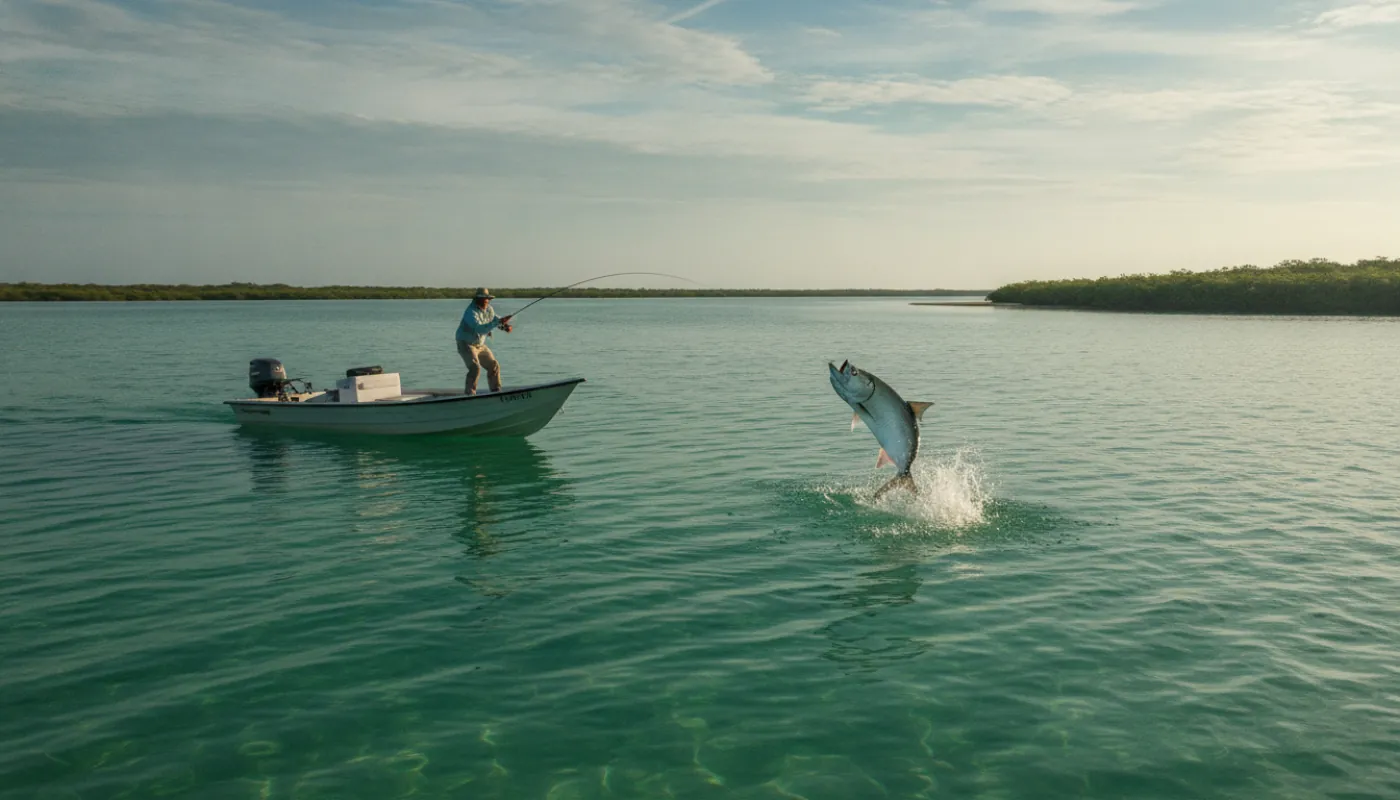
- Wind is the biggest variable. Keys tarpon fishing falls apart above 18 knots. Build a 4-day trip, not a 2-day one, so a blow doesn't kill your only window.
- Tide matters more than time of day. Most guides will reschedule a trip 4 hours earlier if the moving tide moves. Trust their call.
- Bring two pairs of polarized glasses. Amber for low light, copper or grey for high sun. Most missed fish are missed because the angler couldn't see them.
Booking and budget
Top-tier Islamorada and Lower Keys guides run $1,000–$1,400 per day in migration months and book 6–12 months ahead. Expect to pay a 50% deposit. The good guides will not double-book; if you get a quick "sure, I have any day open" in May, that itself is a warning sign.
Picking a guide
Look for guides who:
- Specify what they target you for, many will not run live-bait trips, others will not run fly-only.
- Have a verifiable migration-month booking history (a real guide is booked solid in May).
- Will tell you when not to come, "skip the new moon week, the tide's wrong" is a hallmark of a real operator.
If you guide the Keys and want to be listed when anglers are planning their tarpon trip, list your guide service on Angling Hubs, anglers searching for tarpon by month should be able to find you.