Fly fishing has a reputation for being gear-heavy. Walk into a fly shop and you'll see hundred-dollar waders, carbon fiber reels that cost as much as a used truck, and specialty gadgets promising to solve problems you don't have. Most of this is marketing. The truth, according to guides who spend 200+ days a year on the water, is simpler: you need a solid core, access to the water, and the wisdom to know what doesn't matter. This checklist separates the essential from the noise, and it comes from the people who fish for a living, not the people selling you gear.
The Essential Core: Rod, Reel, Line, Leader
Your fly rod is your most important tool, and this is where your budget should concentrate. A quality mid-range rod ($150–$400) will outfish an expensive one in your hands. What matters: the rod's action (how it bends and recovers) and whether the weight matches the water you fish. A 5-weight is the standard for small to medium streams and moderate rivers. A 6-weight handles wind and bigger water. Saltwater? That jumps to 8–10 weight depending on species. Avoid rock-bottom rods that feel dead in your hand, but also skip $800 rods marketed by celebrities.
Your reel doesn't need to be fancy. Its job is to hold line and apply drag consistently. Spend $75–$150 here. What matters: a sealed drag system (keeps sand and salt out), smooth operation, and capacity for your line weight and backing. An open-reel design that looks beautiful but floods after six casts is expensive nostalgia. Similarly, your fly line, the weight-forward floating line, is non-negotiable quality. This is a $30–$50 item that directly affects how your fly lands. Don't cheap out. Your leader, the tapered section connecting line to fly, can be a tapered commercial leader ($3–$6) or hand-tied. Most guides tie their own after stripping the backing off old spools, but commercial leaders work fine. Tippet material (the final section where the fly attaches) is where you can save: a $4 spool of 5X tippet lasts all season.
Waders, Boots & Access Gear
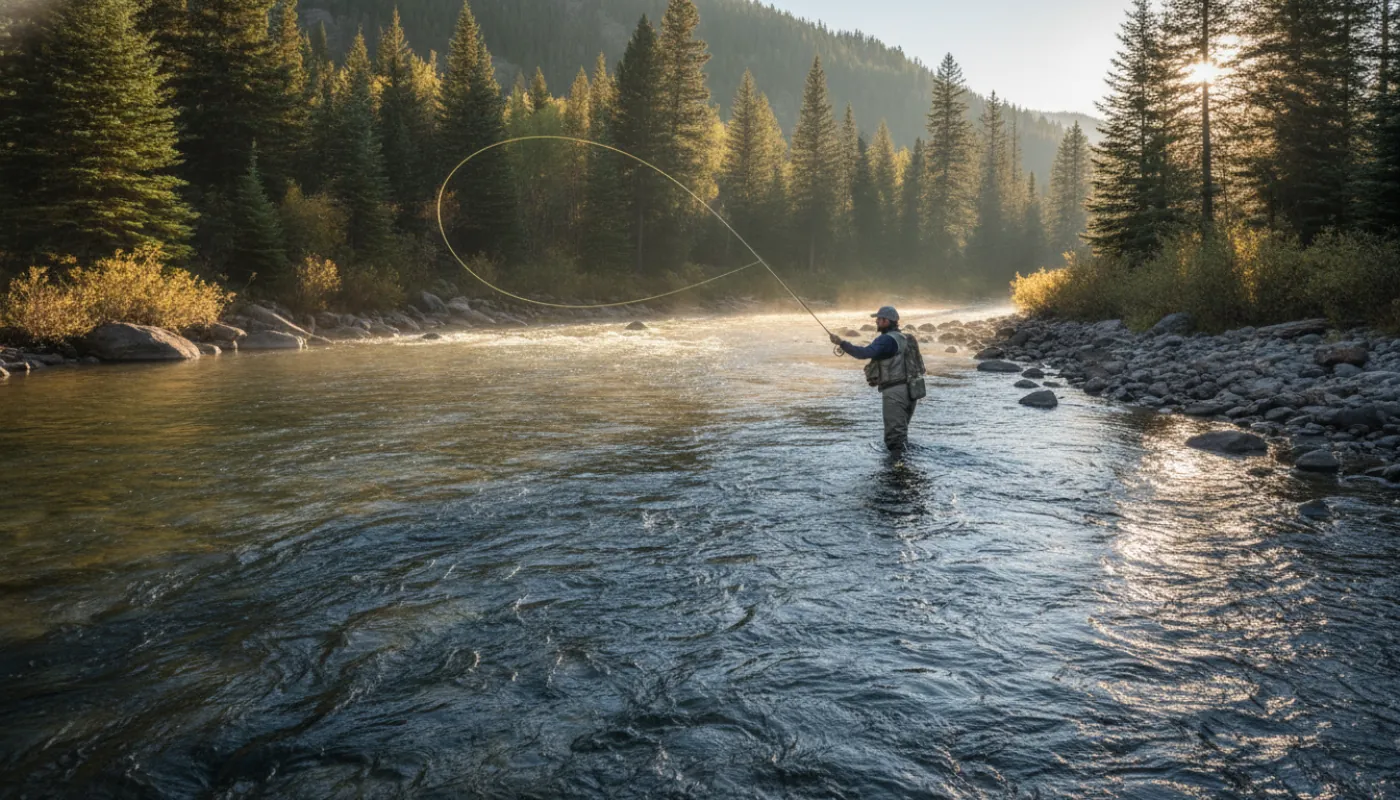
Waders keep you dry and warm, but they're where people often overspend. Quality matters because a failed wader leaves you cold and miserable, but premium doesn't mean expensive. Breathable waders ($200–$400) are standard for most freshwater fly fishing. Neoprene waders are cheaper ($80–$150) and better for cold water but bulkier. You don't need Simms or Patagonia waders to fish well, mid-range brands work fine. Your feet matter more than your hips. Wading boots with felt soles ($80–$150) give you traction on slippery rocks and prevent dangerous slides. Some waters ban felt (check local regs), so rubber-soled boots are sometimes required. Buy boots that fit comfortably with thick socks; blisters on day two ruin a trip.
Beyond waders and boots, keep access gear minimal: a fishing vest or waistpack ($30–$80) holds fly boxes, tippet spools, and floatant. A net (landing fish without bruising them, plus an ethical detail guides notice) runs $20–$60. Polarized sunglasses ($50–$150) are essential, they cut glare and let you see trout under the surface. Skip the neon webbing and branded chest packs designed to look tactical. You're wading, not heading into combat. A good hat ($15–$30) protects your face and keeps sun off the water, reducing reflection. That's the functional layer. Everything else (fancy sling packs, color-coded tippet organizers, bamboo fly cases), is organizing anxiety, not improving your fishing.
What Fly Fishing Gear Marketing Sells You (But You Don't Need)
This is the hype section. Expensive fly reels with sealed drags sound necessary until you realize most guides still use fifteen-year-old reels that cost $80. Specialty lines for every condition (midge lines, small-stream lines, indicator lines), usually just collect dust. Fish care about fly choice and presentation, not whether your line was engineered by aerospace researchers. Mid-range rod brands perform as well as premium ones; the difference is cosmetics and marketing budgets. Carbon fiber rod handles look slick but offer no practical advantage over cork.
Gadgets that promise to solve fly fishing are the clearest sign of marketing noise. Electronic strike indicators that beep are heavier and less sensitive than a small piece of yarn. Fancy knot-tying tools sit in boxes, guides tie clinch knots by hand in thirty seconds. Specialty fly boxes with waterproof seals solve a problem that doesn't exist. Apps that claim to predict hatch timing work worse than watching the water. Drift indicators that magnify your view of where your fly goes are more distraction than help. Premium floatant that costs $12 a bottle works the same as the $4 version. Chest packs with seventeen pockets encourage you to carry gear you'll never use. The common thread: these products work, but they solve first-world problems in an activity where simplicity is an asset. Your competitive advantage against the fish comes from reading water, casting placement, and fly selection, not equipment complexity.
Fly Selection: Where Precision Actually Matters
Here's where gear minimalism ends: flies. Your fly selection is the one area where specificity wins. You don't need hundreds of flies, but you need the right patterns for the water and season you're fishing. A basic starter set (50–100 flies across dry flies, nymphs, and streamers) costs $50–$100 and covers most freshwater scenarios. The mistake beginners make is thinking one fly works everywhere. It doesn't. A size 14 Pale Morning Dun works on some streams during spring. A size 18 Baetis works on others in fall. The difference matters.
This is why guides fish their local water for years: they know which flies work when. Browse our guide directory to find someone fishing your target water. If you're hiring a guide, watch which flies they tie on, that's education you're paying for. Streamers (larger, flashier flies that imitate baitfish) are worth investing in; guides rely on these year-round. A dozen quality streamers ($30–$50) will catch more fish than a hundred bargain dries. The physics of your fly line and leader does almost nothing if your fly doesn't resemble something the trout will eat. Conversely, the perfect fly on a poor presentation wastes both. This is why fly selection is the craft part of fly fishing, it requires knowledge and observation, not expensive equipment.
Seasonal & Water-Type Adjustments
Your core gear works across seasons and water types with minor adjustments. Saltwater fly fishing requires a heavier rod (8–10 weight), a sealed reel to handle salt corrosion, and flies that mimic baitfish in your target area. Visit our destination guides for region-specific fly patterns and local water conditions. Cold-water winter fishing means thicker neoprene waders and a rod matched to that weight, but the fundamentals stay the same. High-altitude mountain streams often mean smaller rods (3–4 weight) and shorter casts; Pacific Northwest rivers mean larger rods and heavier lines. None of this requires buying new gear; it means swapping your rod or upscaling your wader material.
The final piece: ask local guides about their checklists. Not what they recommend selling you, but what they actually fish with. Notice what's worn and what looks new. That's the real signal. A guide with fifteen-year-old waders that still seal properly owns better information than a catalog. Your checklist isn't something you buy once; it's something you refine by fishing and listening to people who fish for a living. Start with the essentials, avoid the hype, and upgrade based on what the water teaches you, not what marketing promises.