A $200 budget stretches further in saltwater tackle than many anglers realize. That ceiling buys you a solid rod capable of handling everything from redfish and snapper to inshore stripers and light offshore work, provided you know what to prioritize. Guides operating on a shoestring don't have the luxury of premium equipment; they've learned which mid-tier rods hold up under daily use and actually improve your casting accuracy and sensitivity compared to entry-level options. The sweet spot at this price point is finding a rod with a responsive blank that won't wilt under load, guides that won't corrode or bind, and a handle that won't fatigue your hand over a full day on the water. Spinning rods dominate this budget tier, but conventional setups and quality combo deals exist if you know where to look.
What Matters in a Saltwater Rod Under $200
The blank action and material are the first filters. At this price point you'll mostly see graphite composite or fiberglass, and quality graphite-composite rods are both common and desirable here, graphite transmits vibration best, which is what you want for feeling structure or a subtle bite. A cheap, over-stiff graphite blank can feel brittle and hollow, so the goal is a well-built composite: sensitive but forgiving over a 4- to 6-hour day. Fiberglass runs more durable and forgiving, at the cost of a little sensitivity. Sensitivity matters for saltwater sight-fishing; you want to detect a bonefish's soft mouth through the line, not just feel the savage strike. Stainless steel or aluminum oxide guides are non-negotiable because saltwater corrodes cheap chromed hardware in weeks.
Weight distribution and grip comfort get overlooked because they don't sell rods, but they determine whether you're fishing comfortably at hour three. A rod that balances near the reel seat, with a foregrip long enough to palm without cramping, makes a measurable difference over a 12-hour trip. Guides choose rods they can fish all day without thinking about fatigue; that's your benchmark. Action, the rod's bend curve under load, should match your target species. Inshore redfish and permit favor a faster tip (sensitive, precise casts), while pompano and bonito need slightly softer mids to keep from throwing small baits. At $200 you're not choosing between five actions; you're working with maybe one or two options per rod type, so match the species list to the action you can find.
Spinning Rods: The Workhorse Category
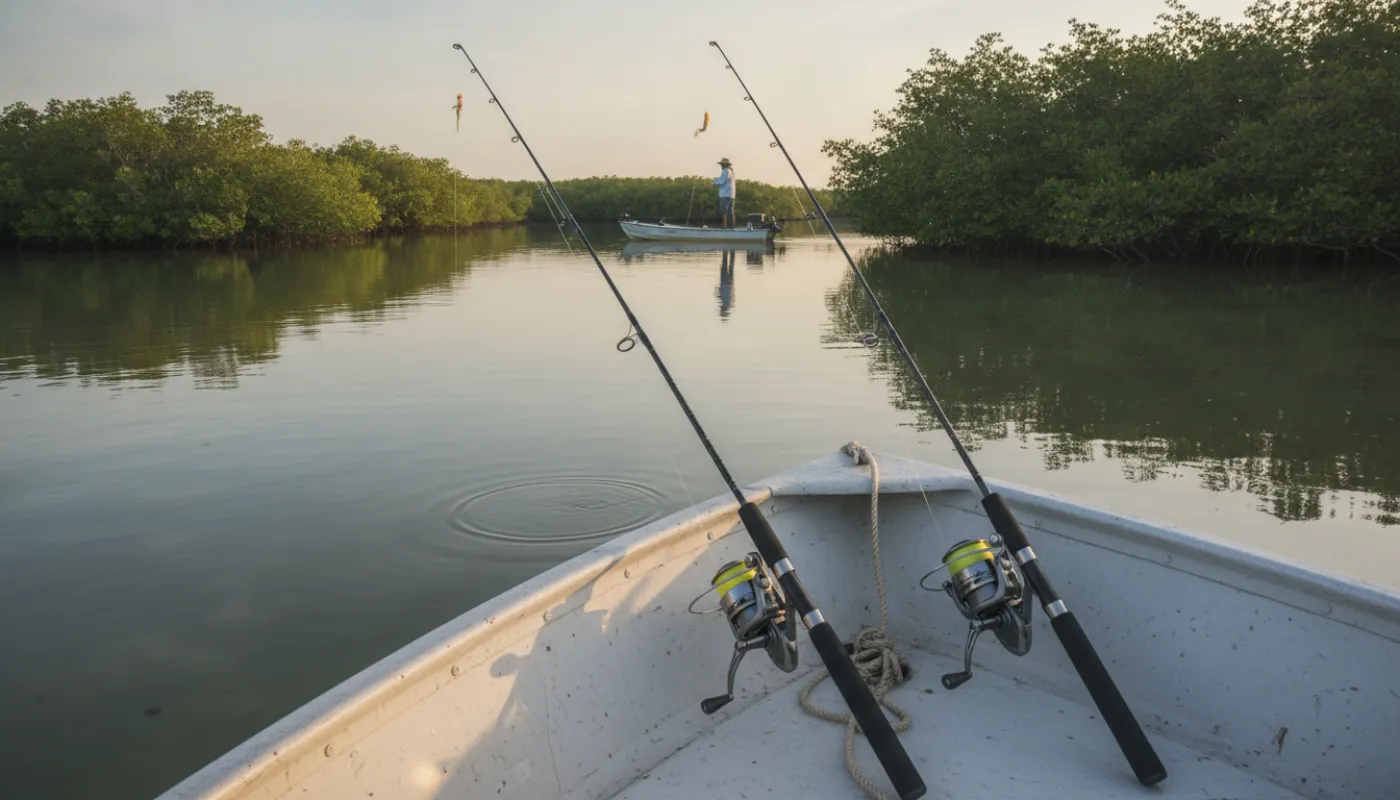
Seven-foot to 7'6" spinning rods dominate the sub-$200 saltwater market because they're versatile enough for both sight-casting in shallows and working structure in 15–25 feet of water. In this range, prioritize a rod blank that's responsive but not twitchy; a rod that feels dead or requires excessive force to load isn't saving money, it's wasting days of fishing. Guides gravitate toward brands that offer consistent medium-action blanks because they work across tackle weights. A 6–12 pound test spinning setup handles typical inshore work without overkill or compromise.
Look for rod butt designs that separate the reel seat from the grip by at least a few inches; crowding the reel too close to your hand creates pressure points and limits casting distance when you need it. Aluminum reel seats cost more than graphite but resist saltwater pitting. If you're building your own rod and reel setup (rather than buying a combo), a good $100–130 rod leaves room for a $70–80 spinning reel, which puts you comfortably under budget with a rig that'll genuinely perform. Avoid rods advertised as "ultra-light" at this price, they're usually whippy compromises that don't hold a workload. A medium-action, 7-footer is the reliable choice.
Conventional Reels and the Budget Baitcaster Route
Conventional (round) reels and low-profile baitcasters aren't the default for every angler, but guides working with clients who want to improve accuracy often recommend a conventional setup under $200. The advantage is mechanical simplicity and comfort for new casters once they dial in thumb control. At budget prices, conventional rods tend to be shorter (5'6" to 6'6") and lighter, which is perfect for boat work and sight-casting where distance isn't the priority.
The gap here is that a quality budget conventional reel adds $100–150 to your cost, so pairing it with a $70–100 rod keeps you in the ballpark. Rod-blank-wise, look for slightly softer actions paired with conventional reels; the reel's mechanical advantage forgives a less stiff blank, and you'll appreciate the forgiveness when casting into wind. Baitcaster rods marketed for inshore saltwater are less common than spinning at this tier, but when you find one, the action is usually faster and stiffer to complement the reel's precision. A single-handed 6' baitcaster rod with a low-profile reel suits redfish sight-casting remarkably well if you've got the thumb control dialed in.
Rod and Reel Combos Under $200
Pre-assembled combos solve the decision paralysis, and a handful of them punch above their weight class. The tradeoff is that you're accepting whatever reel comes matched to the rod, sometimes ideal, sometimes compromised. The best combos pair a solid spinner (3000 to 4000 size) with a 7' medium-action spinning rod. Reels in this tier offer smooth drags, sealed bearings for saltwater exposure, and enough spool capacity for 200-plus yards of braid without breaking the bank.
Conventional combo packages are rarer at this price, but when they appear (usually from brands focused on boat fishing), a matched conventional rod and reel under $200 is a legitimate shortcut for someone starting out. The rod blank and reel work together from the factory, so you skip the guesswork. Guides often recommend combos to first-time clients who just want to fish rather than tinker. The catch: you can't upgrade the reel easily without replacing the whole package, so if the reel underwhelms after a season, you're locked in. That risk is why assembling your own, if you have the patience, often beats a mediocre combo.
Choosing the Right Rod for Your Target Species
Permit, bonefish, and other flats species demand a faster-tip rod that telegraphs subtle takes and supports tight line control; that usually means a 7–7'6" rod in the medium to medium-fast range. Redfish in marsh flats want something similar, though a slightly softer mid-section helps if you're throwing topwater and want the rod to load on hookset. Snapper and other structure work can lean toward a slower action because the target is deeper and heavier tackle is forgiven. If you're bouncing between inshore and light-offshore work, common for guides managing diverse trips, a versatile 7'6" medium-action spinning rod is the closest thing to a one-rod solution.
Casting comfort and accuracy improve dramatically when the rod weight and balance match your strength and casting style. Guides spend their reputation on clients landing fish; they choose gear based on consistent performance, not marketing. A rod that casts a half-ounce bait 60 yards on your tenth cast, not just your second, is worth the test session at the tackle shop. If a shop will let you spool up a sample rod with line and feel the balance, take that time. Online reviews help, but the weight distribution and grip shape are personal, what works for someone else's hand size might frustrate you after an hour of casting.