Anyone with a six-pack license and a hull can sell you a fishing charter. The difference between a real captain and a tourist operator usually shows up before you ever step on the boat, in how they answer questions on the phone.
This is the short list we hand to first-time bookers. None of these are gotchas. A captain who runs a serious operation will answer all seven without hesitation.
1. "What were you catching this week?"
A working captain has been on the water in the last 72 hours and will answer in specifics: species, bait, depth, tide stage. A bait-and-switch operator answers in seasons ("we get a lot of redfish this time of year").
If the answer sounds like a brochure, keep dialing.
2. "Where do you launch from, and what's the run time to the fishing?"
The actual fishing time on a 6-hour charter can range from 5 hours to 90 minutes depending on the run. A pro tells you up front: "It's a 35-minute run to the flats, but if the wind shifts north we fish closer in and you get more lines-in-water time."
Run time is the single biggest hidden variable in charter quality. Anyone evasive about it is hiding a long run.
3. "What's the trip if conditions are bad?"
The honest answer is some version of: "I make the call by 6 AM the day of, and if I cancel you get a full refund or a reschedule." Watch for two red flags:
- "We always go out", a captain who runs in unfishable conditions to keep the deposit is a captain who will run with you in unfishable conditions.
- "You forfeit the deposit if you cancel" with no equivalent rule on the captain's side.
A working captain would rather eat one trip than burn a Yelp review.
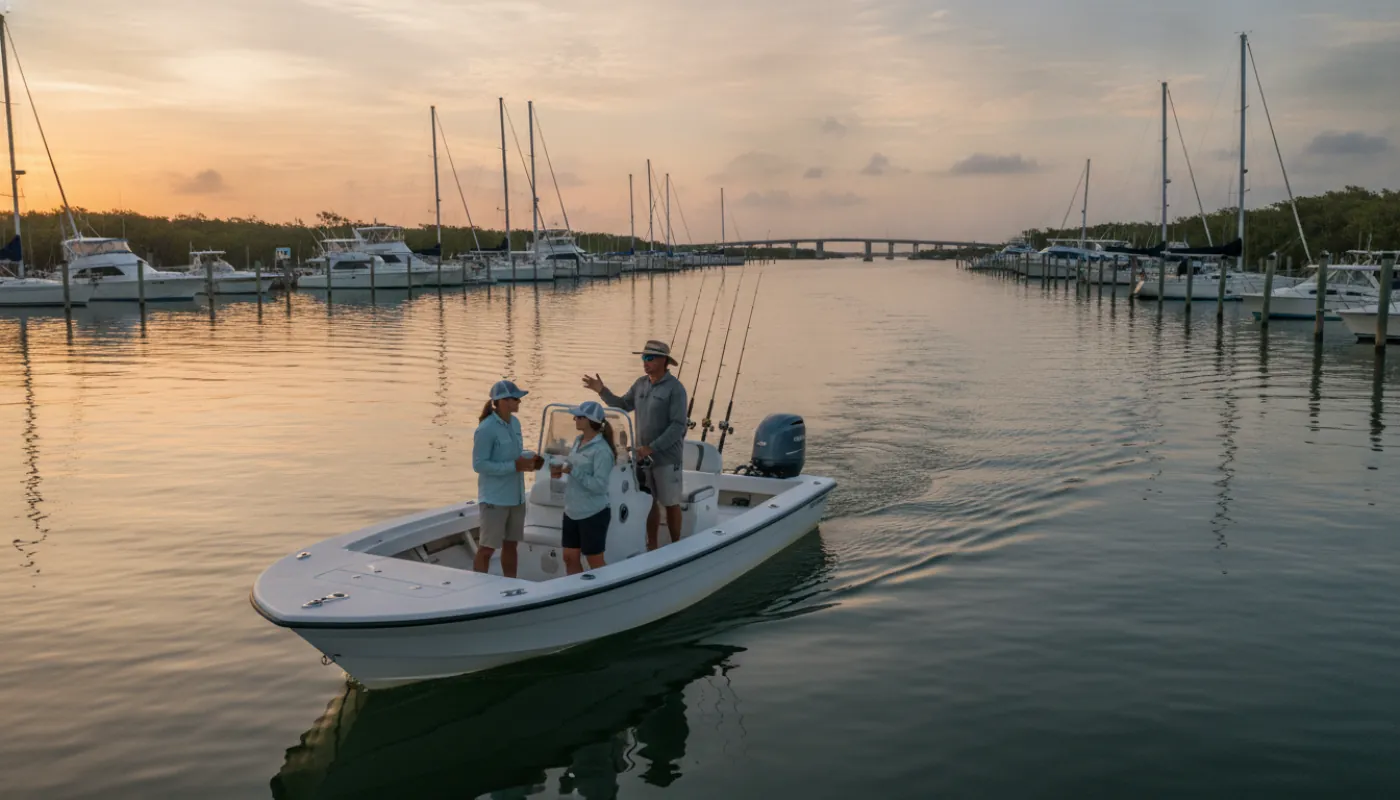
4. "How many anglers, and can you describe the boat?"
For inshore: a center console rated for 6 should not be sold for 6 anglers fishing at once. Three is comfortable, four is the practical max if you actually want to cast.
For offshore: ask about the head, shade, and cooler capacity if you're booking a full day. "Yes, AC head" is a different boat than "five-gallon bucket below."
5. "Single guide, or do you have mates?"
For inshore poling-skiff trips, you want the captain on the platform, that's the product. Adding a mate is awkward.
For offshore trolling, a mate matters. Three lines out, a captain alone in the tower is a setup for tangled spreads when the bite comes.
Ask, then match the answer to the trip you're booking.
6. "What gear should I bring, and what do you provide?"
Real answer: "I provide everything: rods, reels, terminal, bait, ice, water. Bring polarized sunglasses, sunscreen, a hat, and non-marking shoes. No bananas." (Yes, that's still a thing.)
If the captain tells you to bring your own rods on a $1,200 charter, something is off. Either gear is in bad shape, or the price doesn't include what it should.
7. "Can I see a recent photo log or talk to a client from this week?"
Every captain worth a damn has a phone full of fish photos with timestamps. Hesitation here is the loudest red flag on this list.
If the captain says "check Instagram" and Instagram has nothing from the last month, the boat is not running enough to be worth your day.
A scoring shortcut
If a captain answers six or seven of these confidently and specifically, book the trip.
If they answer four or five, ask follow-ups before paying a deposit.
Three or fewer. Call somebody else.
If you operate a charter or guide service and want to be listed on Angling Hubs, list your guide service so anglers vetting captains can find you when they're booking.