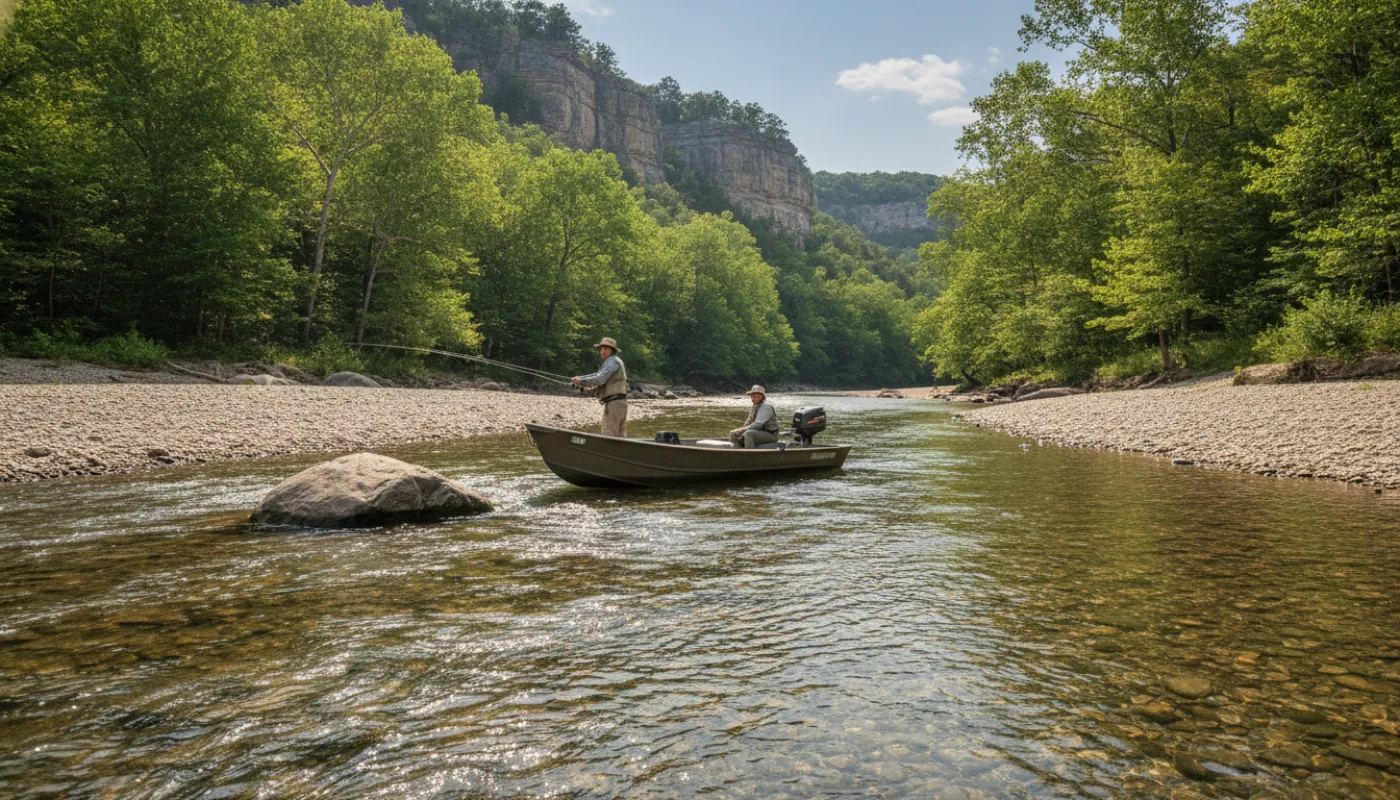
Float fishing for smallmouth bass on Ozark rivers is fundamentally different from still-water reservoir fishing or guided charter runs. You're moving with the current, covering miles of water in a single day, and you need to be self-sufficient, no lodge at the end of the river, no guide to spot fish. The Ozarks, spanning Missouri and Arkansas, offer exceptional smallmouth habitat: clear current-fed water, rocky structure, and wild populations that respond to topwater and small crankbaits. But success requires serious planning. You need to know which rivers hold fish in the season you're fishing, what gear actually works from a canoe or johnboat, how to navigate permit requirements, and how to manage safety on moving water. This guide walks you through the essentials so your next Ozark smallmouth float is the hunt you envisioned, not a frustrating scramble down unfamiliar water.
Choosing Your Ozark River
Not all Ozark rivers are equal for smallmouth. The Buffalo National River in Arkansas and the Eleven Point River in Missouri stand out as premier smallmouth destinations, but they're also heavily trafficked and busy with shuttle traffic in season. The tributaries of the upper White River (the North Fork, Crooked Creek, and the Kings River), offer more solitude and excellent smallmouth populations. (The White's dam-cooled main stem is a trout tailwater; the smallmouth live in the free-flowing tributaries.) In Missouri's Ozark region, the Meramec River holds solid fish, particularly in its lower sections where current and structure concentrate smallmouth year-round.
Research current conditions and historic water clarity before committing to a trip; late spring and early fall typically offer the clearest water and most stable temperatures. Check recent trip reports and talk to local guides, they know which sections are hot right now and which are crowded or low. The rivers that hold the most fish aren't always the easiest float or the most scenic, so decide what matters to you: solitude, trophy potential, or scenery. Rocky, current-swept sections with good structure generally hold more smallmouth than sandy pools. Once you've identified a river, get a detailed topographic map and study the access points; many Ozark floats require shuttle services or vehicle spotting, which adds logistics but ensures you don't end up walking out of the woods.
Seasonal Timing and Water Conditions
Spring smallmouth on Ozark rivers spawn in the shallows and are catchable but susceptible to overexploitation if you're careless with handle time. Late April through May offers exciting topwater action as fish move shallow, though you may encounter spawning fish that shouldn't be heavily fished. Summer water temperatures climb into the 70s–80s°F range, pushing smallmouth deeper and into current seams where they hold in shade and oxygen-rich water. Float fishing still works but requires more precise presentations to deeper structure.
By August, many Ozark rivers drop to summer levels, which can make navigation tricky in shallower sections. Confirm water releases from dams and current flows with local sources before you plan a summer float. Fall, September through October, is prime time. Water temperatures drop into the 60s–70s°F, smallmouth become aggressive, and you'll find them repositioning for seasonal feeding binges. Winter floats are possible but cold water means slower fishing and higher hypothermia risk if you take a swim. Plan your trip around water release schedules if your target river is dam-controlled. Check USGS gauges and local outfitter reports 5–7 days before your float; a river that's float-able one week can be unnavigable the next due to upstream releases or rainfall. Aim for moderate water levels, high water makes fish unpredictable and fishing harder, while very low water can strand you or force difficult portages.
Essential Tackle and Gear Setup
Forget heavy saltwater tackle or deep-water reservoir rigs. Ozark smallmouth float fishing rewards aggressive presentation in shallow to medium-depth water. A 6.5–7-foot medium or medium-light rod paired with a good baitcasting reel and 10–12-pound braided mainline gives you control and sensitivity in current. Topwater plugs (poppers, walk-the-dog sticks, and pencil baits in 2–4-inch sizes), are your bread and butter, especially in spring and fall. Small crankbaits in the 1.5–2.5-inch range, configured to dive 5–10 feet, let you cover structure quickly and work defined drop-offs without getting hung up.
Jigs in the 1/8–3/8-ounce range, paired with soft-plastic craw imitations or tubes, excel when fish are tight to rocks or current breaks. Don't overlook soft plastics on drop-shot rigs for technical presentations. Pack three complete setup combinations so you're not stuck if you break off or lose a rod to a clumsy tumble out of the boat. Bring a quality landing net with a short handle, it clips to the boat frame and gets fish in quickly without needing a partner to stabilize the boat. Polarized sunglasses are mandatory; you'll spot more fish visually in clear Ozark water than any other way. Waterproof dry bags for your phone and keys, a headlamp, and a small first aid kit round out the essentials. Float-trip gear should be lightweight and quiet. Noisy or cumbersome equipment wears you down over 8–10 miles of river and spooks fish in shallow water.
Permits, Shuttle Logistics, and Safety
Many Ozark rivers funnel float trips through established shuttle services. The Buffalo National River does not require a permit or fee to float, but as of 2026 several of its campgrounds (Steel Creek, Ozark, Carver, Tyler Bend, Rush) require reservations through recreation.gov, so book your site well ahead if you plan to camp; some smaller and backcountry sites stay first-come. In Missouri, the Eleven Point is a National Wild and Scenic River managed by the US Forest Service (Mark Twain National Forest); its launches and take-outs (Cane Bluff, Greer, Turner Mill, Riverton), are Forest Service accesses, and the Missouri Department of Conservation sets the fishing regulations. Confirm entry requirements before booking lodging or arranging time off.
Know the fishing regs, too. Missouri's statewide black-bass limit is 12 inches and six per day, but several Ozark streams, including a stretch of the Meramec, are Smallmouth Bass Special Management Areas with a 15-inch minimum and a one-fish daily limit. Check the specific section you're floating before you keep a fish.
Most float trips require a shuttle (your car needs to be at the take-out, not the launch), so budget extra time and cost for a shuttle service or find a friend to spot your vehicle. Plan to launch at dawn. Float fishing demands 6–8 hours of fishing time to justify the effort, which means long days and accumulated sun exposure. Bring more sunscreen than you think you need, plus a wide-brimmed hat and a long-sleeve UPF shirt. Water temperatures in spring and early fall are deceptive; they're cold enough to induce hypothermia within an hour if you swim fully clothed, so wear a Coast Guard-approved PFD at all times and keep your dry bag with emergency clothes accessible. Know how to read current and identify strainers, fallen trees that trap boats. Scout ahead and portage around hazards rather than threading needles. Bring a rope and carabiner for unplanned portages. Tell someone your float plan and expected take-out time; carry a fully charged satellite communicator if you're in an area with spotty cell coverage.
Scouting and Final Preparation
Scout your target section on foot if possible. Drive or hike access roads to the put-in and take-out, noting difficulty and parking. Walk a mile or two of the riverbank to identify structure, current breaks, and habitat where fish concentrate. Time-of-day matters: early morning scouting shows where smallmouth have been since dawn; late afternoon reveals where they retreat when the sun climbs. Take photos, mark waypoints on your GPS, and note landmarks, a distinctive rock formation or a large dead tree, that will reorient you on the water.
Topographic maps and high-resolution satellite imagery let you preview blind spots and plan your approach before you launch. Veteran float anglers spend as much time planning as fishing; a bad plan wastes a day and money. Reach out to outfitters or local guides in your region, they often share beta freely and can steer you away from current complications. Join regional fishing forums or Facebook groups where locals post real-time water conditions and recent catches; this crowdsourced intel is gold. The night before, organize all tackle in waterproof containers that clip or mount to your boat. Confirm weather, confirm shuttle confirmation, and confirm that your PFD is rated and inspected. Float fishing Ozark smallmouth isn't random; it's methodical. You show up prepared, you stay safe, and you catch fish.